
What Should You Write in a Garden Journal? 10 Things Worth Remembering
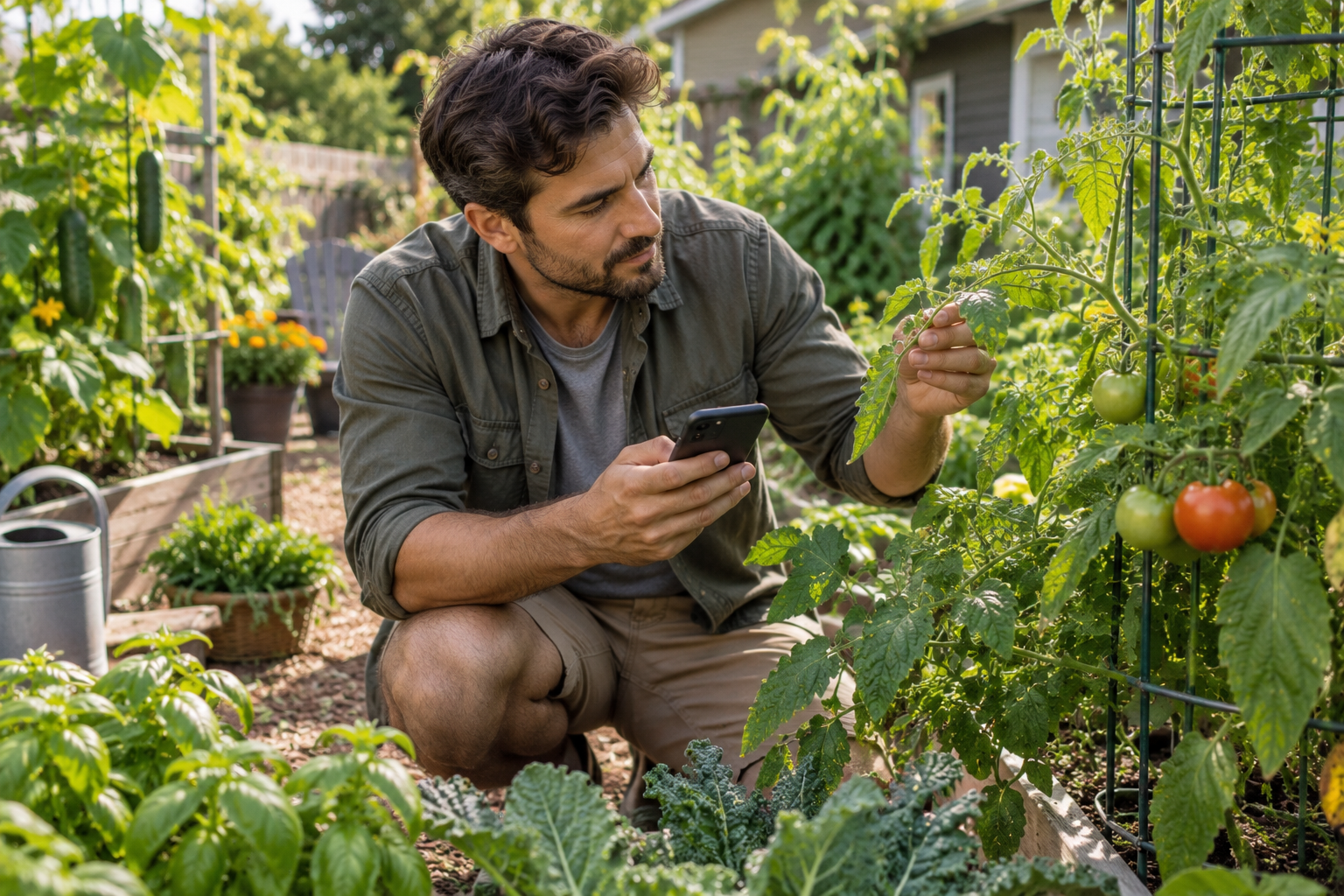
The quickest way to make garden journaling feel impossible is to begin with a list of everything you could record.
Planting dates. Weather. Watering. Fertilizer. Germination rates. Soil temperature. Pests. Harvest weights. Photos. Expenses. Every garden task you completed and every task you meant to complete.
All of those details can be useful. Trying to capture all of them can also turn your garden journal into a second garden that constantly needs attention.
A better question is not “What could I write down?” It is “What will I wish I remembered later?”
For most vegetable gardeners, the ten categories below are enough to create a useful record without documenting every trip outside. Choose the ones that support the questions you care about and ignore the rest until you need them.
If you are just getting started, our complete guide to keeping a garden journal walks through the full process of choosing a format, building a routine, and using your notes later.
10 things worth remembering
1. What you planted
Start with the plant and variety. Variety names matter because two tomatoes, peppers, beans, or cucumbers can perform very differently in the same garden.
If you do not know the variety, record what you know. “Cherry tomato from the farmers market” is still more useful than no record. You can add or correct details later.
Useful details
- Crop and variety
- Seed, seedling, transplant, bulb, or clove
- How many you planted
Example entry
This gives you the beginning of a plant history and makes later observations and harvests easier to connect.
2. Where you planted it
Garden location explains more than we sometimes realize. Sun, shade, drainage, wind, soil, and nearby plants can vary across a small yard.
Use names that feel obvious to you: Bed 1, Bed 3, patio containers, the fence row, or the herb planter. Consistency matters more than creating an elaborate map.
Example entry
Next season, that detail helps you remember what grew where and compare how the same crop performed in another area.
3. When you planted or transplanted
Planting dates give context to everything that happens afterward. They help you compare germination, time to first harvest, succession plantings, and whether a crop had enough time before heat or frost arrived.
Record the actual date when possible. If you are adding a past memory, an approximate date or season is still useful as long as it is clear that it is approximate.
Example entry
4. Important growth milestones
You do not need weekly measurements for every plant. Record the changes that help build a seasonal timeline: germination, first flower, first fruit, ripening, bolting, dormancy, or the end of production.
Milestones become especially useful across years. They help you see whether a crop started earlier, responded differently to weather, or produced for a longer period.
Example entry
5. Problems you notice
Pests and diseases are worth recording when you first notice them, not only after they become the story of the whole plant.
Describe what you see before jumping to a diagnosis. Include the plant, garden area, symptoms, and how widespread the issue appears. A photo can help when appearance matters.
Useful details
- Affected plant and variety
- Symptoms or visible pest
- Garden area
- Severity or number affected
- Date first noticed
Example entry
That distinction matters. It prevents a future record from making the problem sound broader than it was.
6. What you tried and whether it worked
A treatment note is incomplete until you record the result. Write down what you applied or changed, when you did it, and what happened next.
Avoid turning an early observation into a firm conclusion. “Leaves looked better three days later” is different from “this treatment cured the disease.” Your journal should preserve what you observed, including uncertainty.
Example entry
A follow-up entry might say, “No new powdery patches after five days,” or “It continued spreading.” Both are useful.
7. What you harvested
Harvest records can be as simple or detailed as your goals require.
If you want to compare productivity, include quantities and units. If you mainly care about timing, record the first and last harvests. If flavor guides your seed choices, add a quick quality note.
Useful details
- Crop and variety
- Quantity and unit
- Garden area when relevant
- First, peak, or final harvest
- Flavor, size, quality, or storage notes
Example entry
One sentence preserves quantity, variety, location, timing, and an observation that may explain the result.
8. Weather that changed the story
You do not need to copy the daily forecast into your journal. Record weather when it provides context: a late frost, heat wave, heavy rain, drought, hailstorm, or an unusually cool stretch.
The important part is the connection between conditions and what happened in the garden.
Example entry
If your journal or app captures a weather snapshot automatically, add only the observation that makes those conditions meaningful.
9. What you want to repeat or avoid
Some of the most valuable garden notes are decisions made while the evidence is still in front of you.
Did a variety taste exceptional? Did one bed outperform another? Were six zucchini plants excessive? Did a crop require more space or attention than it was worth?
Record the decision before winter softens the memory.
Example entries
10. Ideas and tasks for later
Gardening creates a steady stream of future intentions: fertilize next week, succession sow another row, try row cover, order a new variety, move a plant, or redesign a bed.
Separate an idea from something you actually completed. “I should plant garlic in Bed 3 next fall” is a plan, not a planting event.
That distinction keeps your history accurate and makes the note actionable.
Example entry
What can you skip?
Routine activity does not automatically deserve a journal entry. You can skip ordinary watering, weeding, and maintenance unless the detail helps explain a result or test a change.
“Watered the tomatoes” may not matter later.
That version preserves a decision and an observed response.
You can also skip details that another system already captures reliably.
The goal is not to create the largest garden record. It is to create one you can use.
A simple test for whether something is worth recording
Before making an entry, ask one of these questions:
- Could this explain why something succeeded or failed?
- Will this affect what I plant, where I plant it, or when I plant it next year?
- Would I want to compare this result with another variety or season?
- Am I likely to ask myself about this later?
- Did I just think “I need to remember that”?
If the answer is yes, record it. If not, keep gardening.
Your entry does not need to sound like a journal entry
Useful garden notes can sound exactly like ordinary speech. You do not need complete paragraphs or technical language. Specific nouns and a few concrete details do most of the work.
This is one reason voice capture fits gardening so naturally. Your hands may be dirty, but you can still say what you see before the detail disappears.
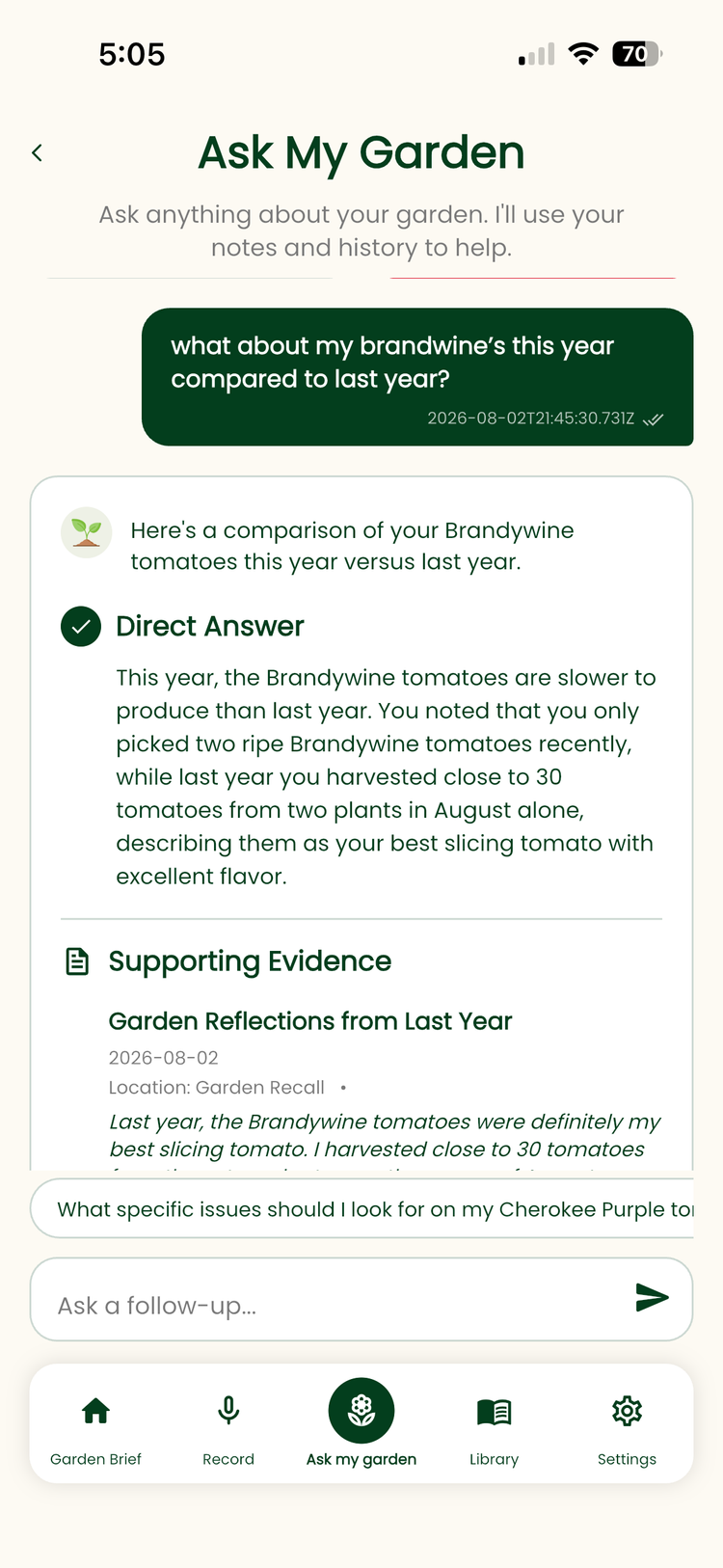
Garden Recall lets you speak naturally about one garden area at a time and include multiple plants, harvests, observations, and tasks in the same recording. It organizes those details into garden memories that you can review instead of asking you to build every entry field by field.

Later, Ask My Garden helps you retrieve those memories with questions such as “When did I plant the cucumbers?” or “Which tomato did I say I would grow again?”
Begin with the next thing worth remembering
You do not need to reconstruct the whole season or design a perfect journal before you begin. Start with the next moment that feels useful.
Say what happened. Include the plant, place, date, quantity, or observation that gives it meaning. Then go back to gardening.
Ten short, specific entries will teach you more next season than a beautiful blank journal ever could.
And if the thought of maintaining any kind of journal already feels like work, read how to keep a garden journal when you hate journaling .
You can also return to our complete guide to keeping a vegetable garden journal for the broader approach.
Try Garden Recall
Garden Recall is the voice-first garden journal for gardeners who want useful records without turning the garden into paperwork.
Capture what happened in your own words, review the organized details, and ask questions about your garden history later.
Explore Garden Recall