
How to Keep a Garden Journal: A Complete Guide for Vegetable Gardeners
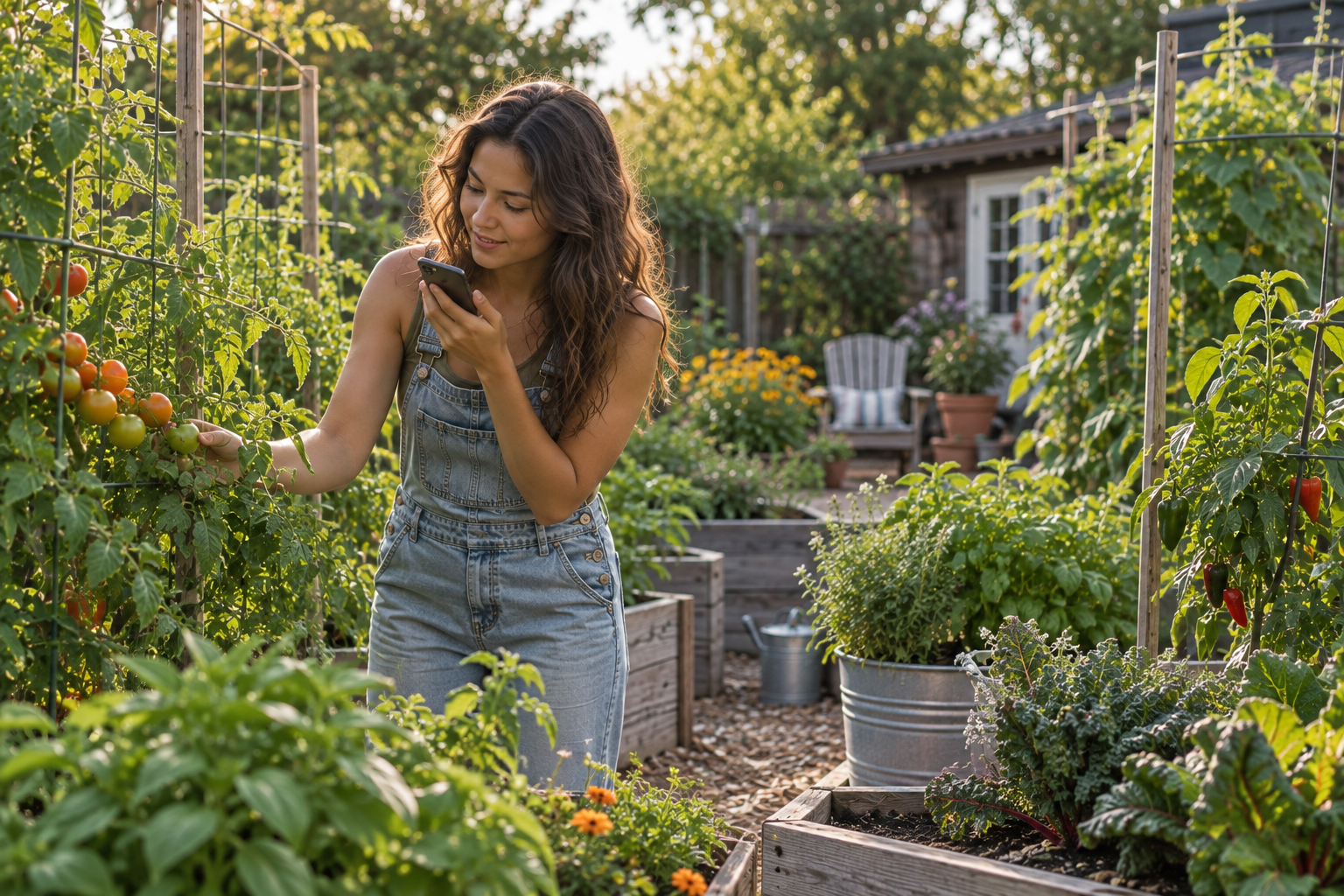
Every growing season produces details you are certain you will remember.
Which tomato variety tasted best. When the cucumbers started producing. What you planted in Bed 3. Whether the neem oil helped. Why you promised yourself never to grow that squash again.
Then winter arrives, the seed catalogs come out, and the details get fuzzy. You remember the general story of the garden, but not always the information you need to plan the next one.
That is what a garden journal is for. Not to create a perfect record of every watering and weed, but to preserve the parts of the season that can teach you something later.
This guide will help you decide what to record, choose a format, build a routine that fits real gardening, and turn scattered notes into a useful memory of your garden.
In this guide
- What is a garden journal?
- Why keep a vegetable garden journal?
- What should you record?
- What you do not need to record
- Choose a garden journal format
- How to start your garden journal
- A realistic routine for keeping it going
- How to use your journal at the end of the season
- The difference between storing notes and recalling your garden
- Start with one useful memory
What is a garden journal?
A garden journal is a record of what happened in your garden over time. It can include plans, planting dates, varieties, garden locations, observations, problems, treatments, harvests, photographs, and ideas for the next season.
The word journal sometimes makes this sound more formal than it needs to be. Your record may be a handwritten notebook, a spreadsheet, notes on your phone, a calendar, a collection of photos, or an app. It can contain long reflections or one-sentence updates.
What makes it a garden journal is not the format. It is the connection between what you noticed today and what you may want to know later.
Why keep a vegetable garden journal?
Gardening advice can tell you what usually works. Your garden journal tells you what happened in your own space, with your soil, sun, weather, timing, and habits.
Remember what you planted
Seed packets disappear. Plant labels fade. Similar varieties grow beside one another. Recording the crop, variety, date, and location gives you a reliable answer later.
Compare one season with another
A single note can help with one question. Several seasons of notes can reveal patterns: a bed where peppers consistently do well, a pest that arrives around the same time, or a variety that performs better under your conditions.
Repeat the wins
The most valuable note may be as simple as “grow this again.” Flavor, productivity, disease resistance, timing, and how much your household actually ate all matter when you choose next year’s varieties.
Avoid repeating the same mistake
A journal can preserve the reason behind a disappointing result. Perhaps seedlings were started too early, garlic went in too late, or a treatment was applied after the problem had already spread.
Plan with evidence instead of impressions
Memory tends to favor dramatic successes and failures. Records add dates, quantities, locations, and sequence. Those details make next year’s plan more grounded.
What should you record in a garden journal?
You can record dozens of things, but you do not need all of them. Start with information that could change a future choice.
Plants and varieties
Record the crop and variety when you know it. “Tomato” may be enough for a quick note, but “Cherokee Purple tomato” becomes much more useful when you are comparing flavor, timing, or disease problems.
Dates and garden locations
Note when and where you sowed, planted, or transplanted. A named area such as Bed 3, the patio container, or the back fence is easier to compare across seasons than a vague reference to “outside.”
Growth and seasonal events
First germination, flowering, fruit set, ripening, and the end of production help build the timeline of a crop. You do not need every stage for every plant; record the ones that feel meaningful.
Pests, diseases, and treatments
Record what you observed, which plants were affected, where it appeared, and what you tried. Add a follow-up note later so you know whether the treatment appeared to help.
Harvests
Harvest records can be precise weights, approximate quantities, or simple milestones such as the first cucumber of the year. Track at the level that serves your goal. A gardener comparing productivity may want totals; another may only need to know that four zucchini plants were far too many.
Observations and decisions
Taste, texture, plant vigor, pollinator activity, weather effects, and the odd things that caught your attention are part of the season’s story. Include decisions such as grow again, move to another bed, plant fewer, or start earlier.
Tasks and ideas
Some garden thoughts belong in the future: fertilize in two weeks, succession sow lettuce, try row cover next spring, or order a particular variety. Recording the idea prevents it from disappearing between the garden and the house.
What you do not need to record
You do not need to document every routine task simply because you can. If recording every watering adds work without helping you make decisions, skip it. If daily temperatures are automatically available elsewhere, you may not need to copy them by hand.
The right level of detail depends on the question you want your journal to answer. A trial comparing two varieties needs more consistent notes than a casual record of garden highlights.
Let purpose determine detail.
Choose a garden journal format
Paper notebook
A notebook is flexible and personal. It is ideal for sketches, taped seed packets, and gardeners who enjoy handwriting. Keep it visible and close to where you enter or leave the garden.
Calendar
A calendar makes timing easy to see and works well for sowing, transplanting, treatments, and first harvests. Space is limited, and comparing plants or searching across seasons can be difficult.
Spreadsheet
Spreadsheets are useful for structured comparisons, seed inventories, and harvest totals. They reward consistency but can feel like data entry during the busiest part of summer.
Photos and phone notes
Photos capture visual change quickly, and phone notes are always nearby. Use consistent labels or folders if you want to find specific details later; otherwise garden information can disappear into the rest of your camera roll and notes.
Garden journal app
An app can connect plants, varieties, areas, dates, observations, tasks, and harvests. Search, filters, and linked histories make retrieval easier. Choose an app that matches the way you want to capture information rather than one whose feature list creates another system to maintain.
Voice-first garden journal
Voice is especially practical when your hands are dirty or you are moving from one part of the garden to another.
Garden Recall was built around this problem: you speak naturally about what happened, and the app organizes the recording into garden memories you can review and use later.

How to start your garden journal
Name your garden areas
Give beds, containers, rows, and other growing spaces simple names you will use consistently. You do not need a perfect map. You need labels that will still make sense next February.
Choose a small set of record types
Begin with plantings, notable changes, problems, harvests, and repeat-or-avoid decisions. Add more only when you see a reason.
Make the first entries about your current garden
Do not wait for January or try to reconstruct the entire season. Record what is happening now. What is growing, where is it, and what would you want to remember?
Use one garden area at a time
When recording several details, grouping them by garden area creates clearer context. You might capture the tomatoes, cucumbers, harvests, and tasks from Bed 3 in one update, then make a separate recording for the patio containers.
Review enough to trust the record
Whether you write, type, or speak, check names, dates, quantities, and important distinctions. “Planning to harvest” is not the same as “harvested.” A record becomes useful when it reflects what you meant.
A realistic routine for keeping it going
The best routine is attached to moments that already happen. Record when you plant, notice a problem, bring in a harvest, or make a decision. Those natural triggers are easier to sustain than a promise to write every evening.
During the peak season, short entries matter more than perfect entries. One sentence captured in the moment is better than a detailed update you never make.
If you already know that traditional journaling becomes a burden, use a lower-friction method. Our guide to keeping a garden journal when you hate journaling explores why small entries and voice capture can make the habit more realistic.
How to use your journal at the end of the season
A garden journal should eventually influence what you do. At the end of the season, review it with a few practical questions:
- Which varieties are worth growing again?
- Which crops produced too much or too little for your household?
- Where did each plant perform best?
- Which pest or disease problems repeated, and when did they appear?
- Which treatment or change seemed to help?
- What should you start earlier, later, or not at all?
- What idea did you save for next season?
Turn the answers into a short repeat, avoid, and try-next-year list. That summary becomes the bridge between this season’s experience and next season’s plan.
The difference between storing notes and recalling your garden
A record is only as useful as your ability to find the right detail when you need it. This becomes harder as seasons accumulate.
A notebook may contain the answer, but which page? A photo may show the plant, but which week? A spreadsheet may have the number, but did you record the observation that explained it?
This is why Garden Recall includes Ask My Garden. You can ask questions about your own garden history and see the memories used for the answer. Instead of rereading an entire season, you can ask when you planted garlic, how many tomatoes you harvested, or which variety you wanted to grow again.
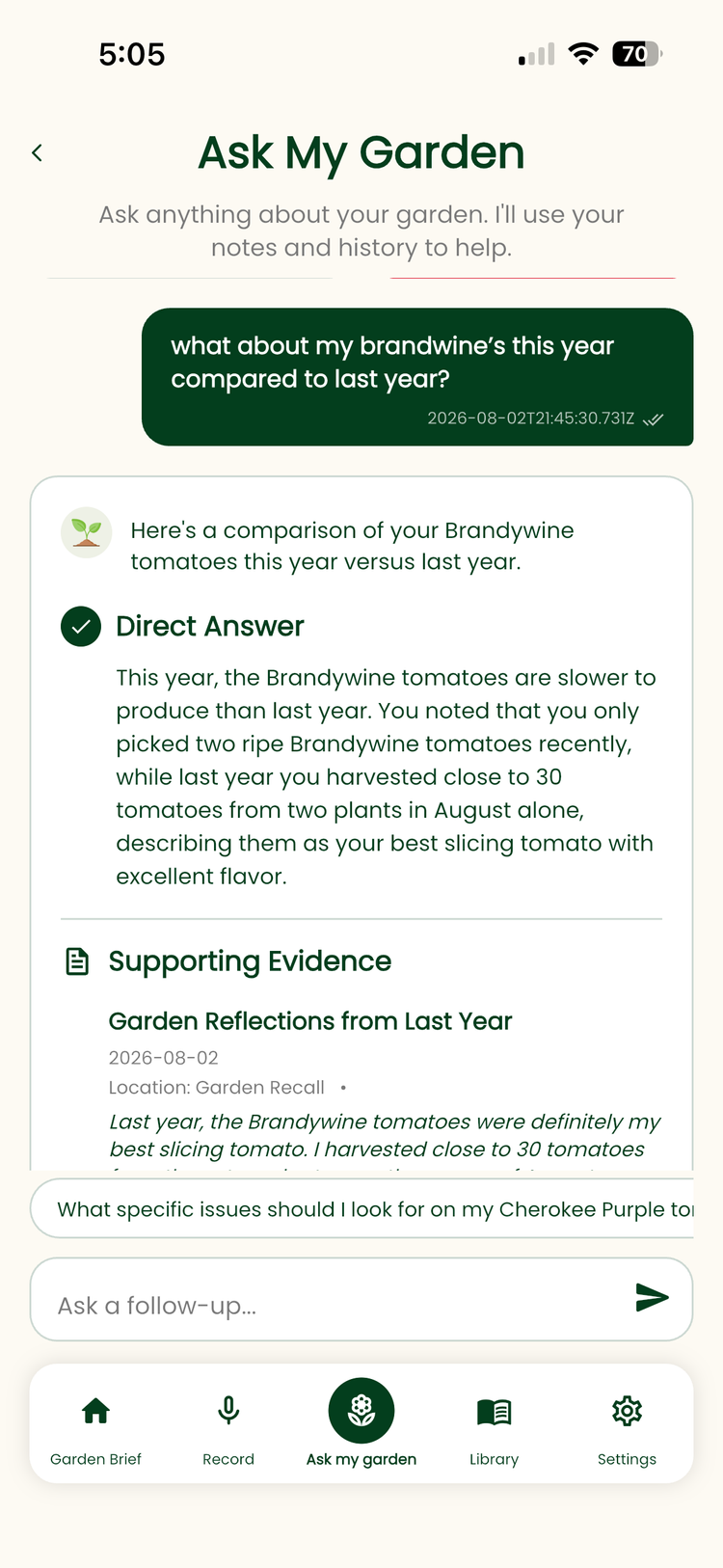
The goal is not simply to collect more garden data. It is to make your own experience easier to use.
Start with one useful memory
You do not need a special notebook, a complete garden map, or a perfect tracking system to begin. Start with the garden in front of you.
Record one thing you would otherwise forget: what you planted, what changed, what you harvested, what went wrong, or what you want to do next. Then record the next decision-worthy moment when it happens.
Over time, those small entries become something surprisingly valuable: a history of your own garden, written by the seasons you actually lived through.
Try Garden Recall
Garden Recall is a voice-first garden journal designed to help you capture garden memories without building every entry by hand.
Speak naturally, review what the app organized, and use Ask My Garden to recall your own history later.
Explore Garden Recall